
A Beautiful House Is Not Always a Good Home
Why good architecture is about more than beautiful photographs
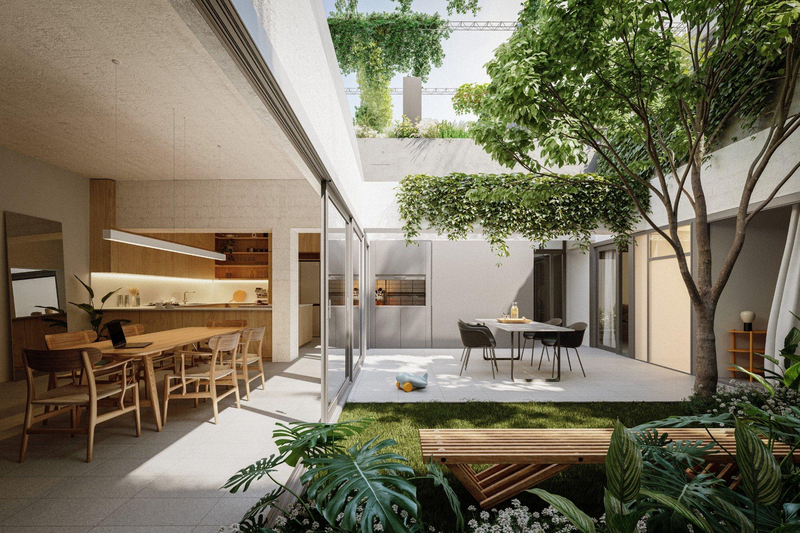

There is something strange about the way we talk about beautiful houses.
We save photographs of them. We send them to friends. We imagine ourselves sitting in their perfectly designed living rooms, drinking coffee beside enormous windows, surrounded by beautiful materials and carefully chosen furniture.
But then there is another question that rarely gets asked:
Would you actually enjoy living there?
A house can look incredible in a photograph and still feel completely wrong when you live in it.
Maybe the kitchen is beautiful but too far from the dining area. Maybe the bedroom gets wonderful morning light, but the afternoon heat makes it uncomfortable. Maybe the living room looks spacious until four people actually sit in it.
This is where architecture becomes more interesting.
Good design isn't really about making a building look impressive.
It is about making everyday life feel a little better.
The spaces we remember aren't always the biggest ones
Think about the homes you have visited in your life.
You probably don't remember the exact size of the living room.
You remember the little things.
The window where afternoon light used to fall.
The quiet corner where someone always sat with a book.
The kitchen where everyone somehow ended up standing, even when there was a perfectly good dining table nearby.
The balcony that became your favourite place in the evening.
These moments are easy to overlook when we start designing from a floor plan.
A floor plan is important, of course. It tells us where the walls, doors, rooms and circulation will be.
But a home is experienced in three dimensions.
And more importantly, it is experienced over time.
Start with life, not walls
One of the easiest mistakes in residential design is to begin with rooms.
"Three bedrooms."
"Two bathrooms."
"Large kitchen."
"Big living room."
There is nothing wrong with these requirements. They are necessary.
But they don't tell us how the house should actually feel.
A better starting point is to ask how someone lives.
Where does everyone gather?
Does the family eat together?
Does someone work from home?
Do guests visit often?
Is privacy important?
Do you prefer morning sunlight or evening light?
Do you spend more time indoors or outside?
Where do you leave your shoes, bags and keys when you come home?
These questions sound ordinary.
They are also architectural questions.
Because once you understand the life happening inside a house, the walls start making more sense.
This is the kind of thinking I bring into my own architectural work, where planning, interiors, natural light, and everyday functionality come together.
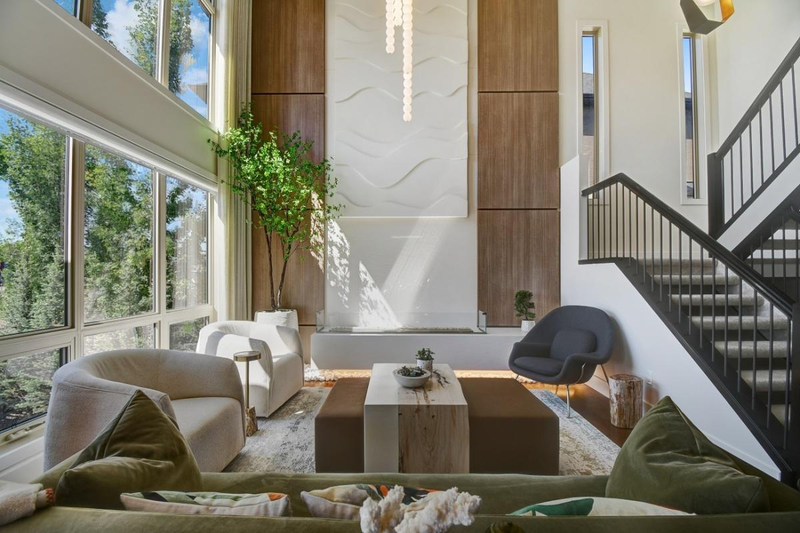
Light changes more than a room's appearance
Natural light is one of those things that photographs beautifully but is much more important in real life.
A room facing the morning sun can feel completely different from the same room facing west.
A narrow window can create a focused view.
A large opening can make a small room feel connected to a garden.
A skylight can turn an ordinary corridor into a place you actually notice.
And sometimes, more glass isn't the answer.
Too much direct sunlight can create glare and unwanted heat. Privacy can become an issue. Furniture can fade. Cooling loads can increase.
So the goal isn't simply to bring in more light.
The goal is to bring in the right light.
That distinction is something I think about a lot when working through a design.
Materials should feel good, not just photograph well
There is another trap in modern architecture: choosing materials because they look impressive in photographs.
A beautiful stone can make a room feel luxurious.
But how does it feel when you touch it?
Does the material age well?
Is it easy to maintain?
Does it work with the climate?
Does it become too cold, too dark or too reflective?
And what happens five years later?
I like the idea that a home shouldn't look exactly the same forever.
Wood develops character.
Stone changes subtly.
Metal gets marks.
Paint loses some of its original perfection.
These aren't necessarily flaws.
Sometimes they are evidence that a place is being lived in.
The best architecture often goes unnoticed
This might sound contradictory, but I think some of the best design is almost invisible.
You walk through a house and everything simply feels right.
The door opens in the right direction.
The kitchen connects naturally to the dining area.
The staircase doesn't interrupt the room.
There is enough storage where you need it.
The window frames a tree instead of a neighbouring wall.
The evening light reaches the place where you usually sit.
Nothing is shouting for attention.
And yet everything has been considered.
That's the difference between decorating a space and designing one.
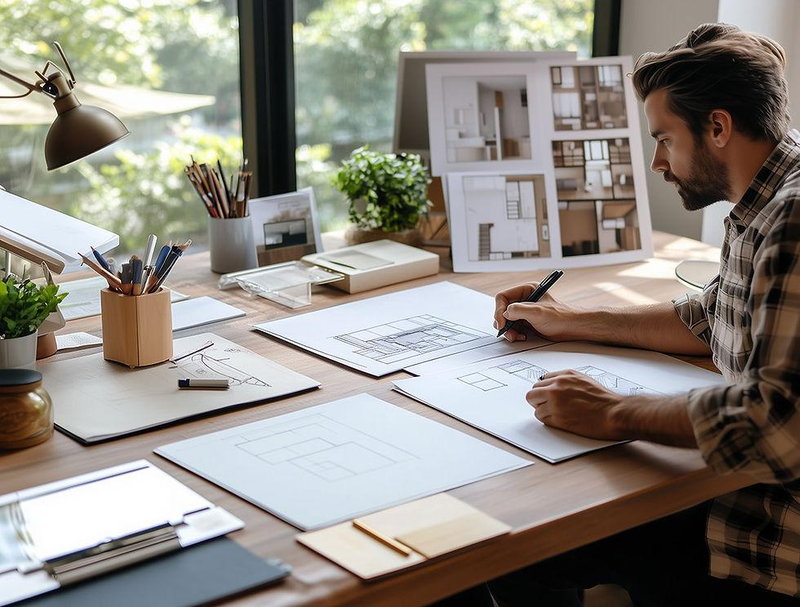
A floor plan is really a map of everyday life
When I look at a floor plan, I don't only see rectangles and dimensions.
I try to imagine someone walking through it.
They wake up.
They open the curtains.
They walk towards the kitchen.
Someone else is already there.
A child runs through the hallway.
A guest arrives at the front door.
Dinner is prepared.
Later, someone sits quietly near a window.
The drawing suddenly becomes something else.
It becomes a sequence of moments.
That is why I believe architectural drawings should never be treated as purely technical documents. They are the beginning of a conversation about how people are going to live.
I explore this approach through residential planning, 2D floor plans, 3D visualization, and interior design in my portfolio.
Good design doesn't have to be complicated
Sometimes the strongest solution is surprisingly simple.
A better window position.
A slightly wider passage.
A shaded terrace.
A small courtyard.
A piece of built-in storage.
A change in ceiling height.
A connection between two rooms that makes the entire house easier to use.
Architecture doesn't always need another dramatic feature.
Sometimes it just needs one thoughtful decision.
And then another.
And another.
Until the house starts feeling effortless.
Designing for the person, not the photograph
This is probably the principle I return to most.
When designing a home, it is tempting to ask:
"Will this look good?"
It is a useful question.
But I think there is a better one:
"Will this feel good to live in?"
The difference between those two questions can completely change a project.
A beautiful photograph lasts for a few seconds.
A well-designed home is experienced every morning, every evening, on ordinary weekdays and during the moments that become memories.
That is the kind of architecture I find most rewarding.
Not architecture that simply asks to be photographed.
Architecture that quietly becomes part of someone's life.
If you're interested in architectural design, floor planning, interiors, or 3D visualization, I share more of my work and design process through my architecture portfolio.

Comments
No comments yet. Be the first to comment!